
Discover how North American raptors utilize specialized hunting techniques—from high-speed stoops to collaborative pack tactics—to secure prey. Learn the birds of prey’s mechanics behind their aerial mastery and predatory success.
Evolution of the Avian Apex Predator
To truly appreciate the diverse hunting strategies of North American raptors, one must first look at their structural engineering. Birds of prey are not a single monolith; they are a highly diversified group of aerial hunters, each custom-built for specific ecological niches. Evolution has meticulously balanced three critical physical attributes to determine how a species hunts:
- wing loading (body weight relative to wing surface area),
- aspect ratio (the shape of the wings), and
- sensory specialization.
For instance, true falcons possess narrow, pointed wings designed for high-speed, dynamic flight, making them the ultimate open-sky pursuers.
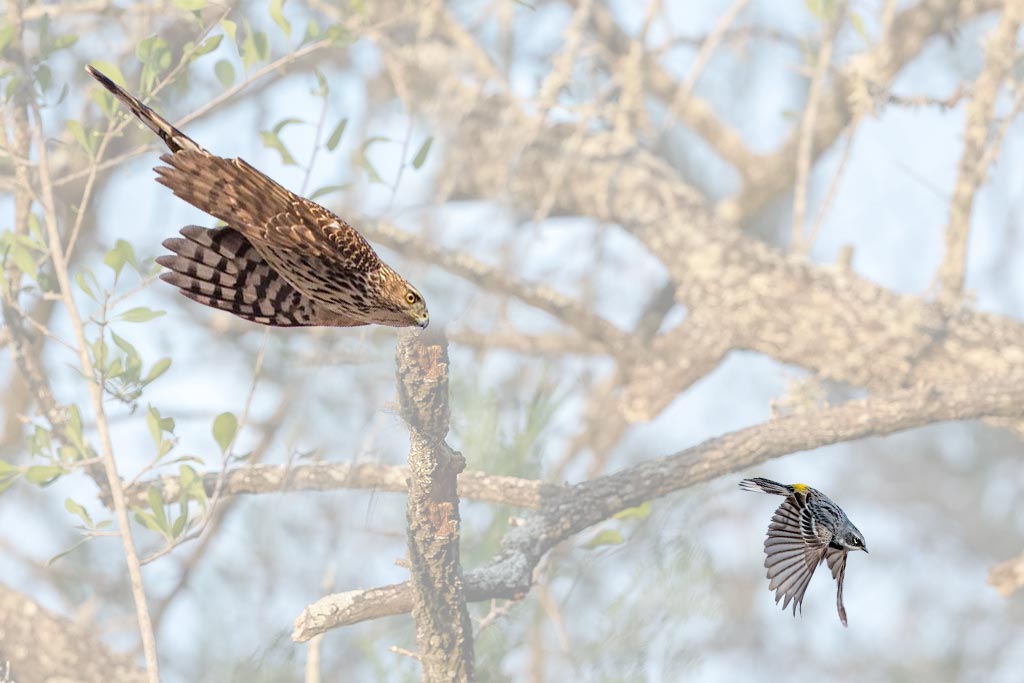
Conversely, accipiters—like the Cooper’s Hawk—have short, rounded wings and long, rudder-like tails, optimized for sudden bursts of speed and high-maneuverability through dense forest canopies.
Buteos feature broad, expansive wings meant for catching thermal updrafts, allowing them to soar effortlessly for hours while scanning the ground below. Understanding these physiological blueprints explains why an eagle cannot hunt like a harrier, and why a kestrel rarely behaves like a goshawk.
The Role of Weather and Topography
A raptor’s choice of hunting technique is rarely static; it shifts dynamically based on weather conditions and local terrain. Wind is a primary energy source for these birds. On gusty days, species with low wing loading can transition from energy-heavy active hunting to effortless kiting, using the landscape’s topography to channel wind currents into free lift.
Thermal columns—bubbles of rising warm air created by the sun heating the earth—act as elevators for heavy raptors like vultures, condors, and large hawks. Without these thermals, continuous flight would be metabolically prohibitive.
Similarly, geographic features such as ridges, shorelines, and forest edges dictate how predators approach their targets. By using hillsides and dense vegetation to mask their approach, low-altitude hunters can surprise prey long before their acoustic or visual footprint is detected.
Mastering the Hunt: A Complete Overview
The following breakdown categorizes the eight primary hunting methods deployed by North American raptors, combining physical adaptations with environmental dynamics.
Perching
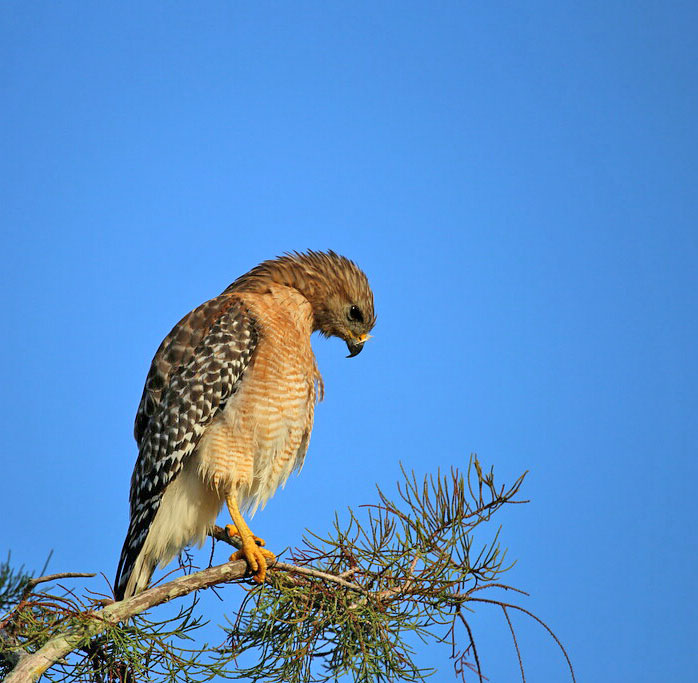
Sitting motionlessly on an elevated vantage point to spot prey below before executing a controlled, energy-efficient ambush.
Typical Practitioners: Snail Kite, Sharp-shinned Hawk, Cooper’s Hawk, Northern Goshawk, Red-shouldered Hawk, Broad-winged Hawk, Red-tailed Hawk, Ferruginous Hawk, Gray Hawk, Common Black Hawk, Audubon’s Crested Caracara, American Kestrel.
Coursing
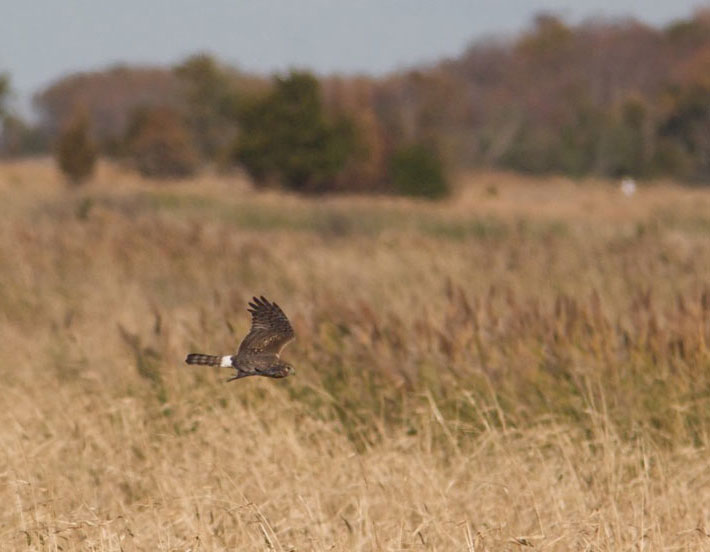
Skimming at a low altitude just above open ground, using topography or vegetation to mask the approach and flush out prey.
Typical Practitioners: White-tailed Kite, Northern Harrier, Swainson’s Hawk, White-tailed Hawk, Rough-legged Hawk, Harris’s Hawk, Zone-tailed Hawk.
Hovering
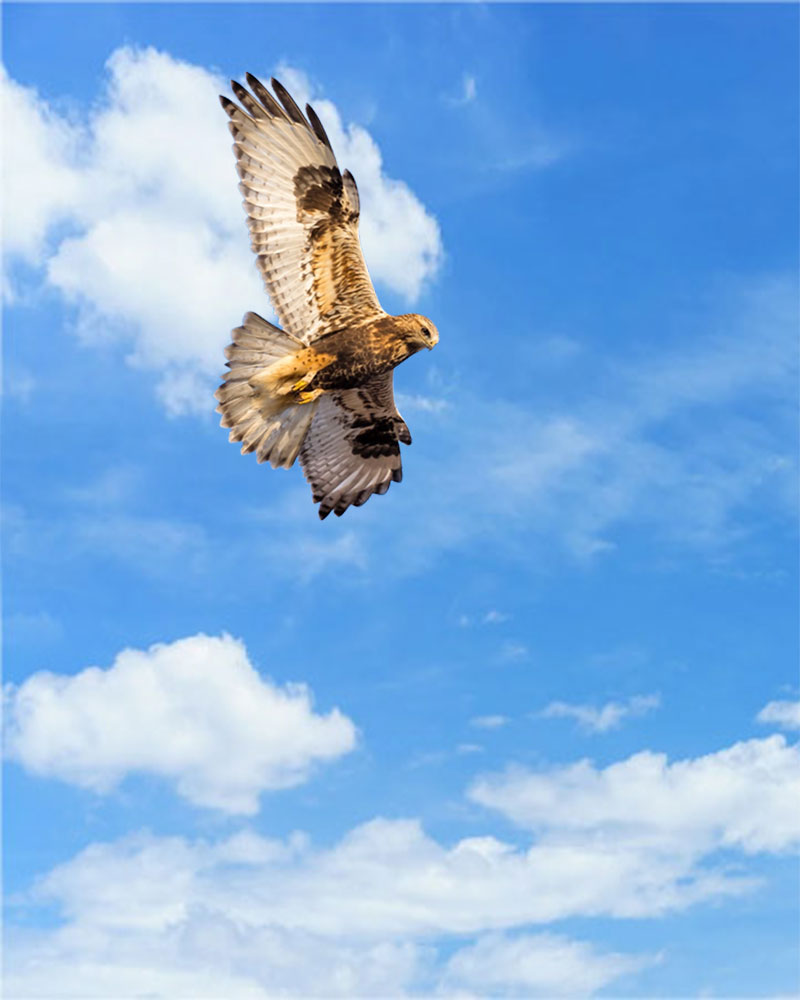
Active, self-sustained stationary flight over a ground target requiring rapid, continuous wingbeats and tail fanning.
Typical Practitioners: Osprey, White-tailed Kite, Short-tailed Hawk, Red-tailed Hawk, Rough-legged Hawk, Ferruginous Hawk, American Kestrel.
Kiting
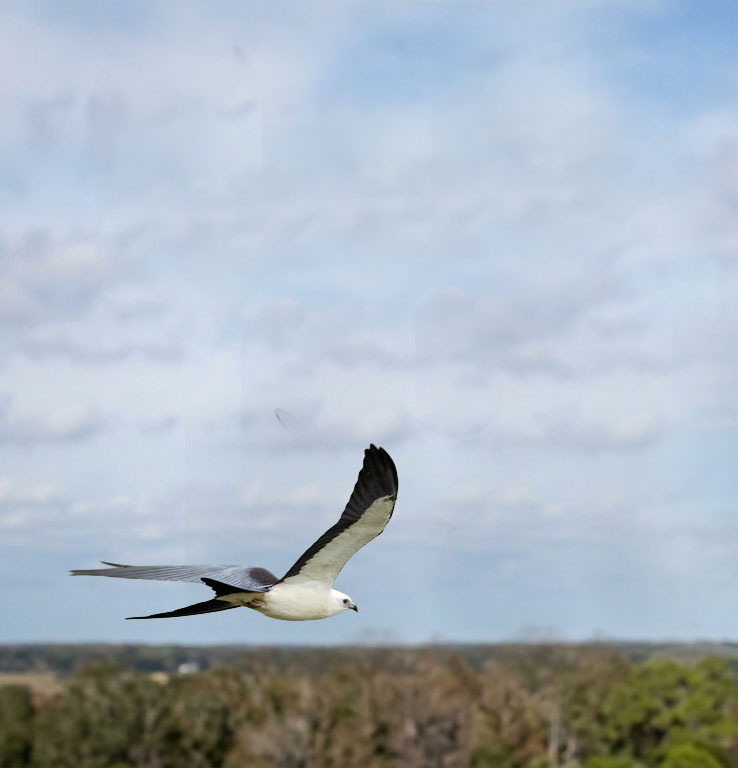
Effortless, stationary aerial floating achieved by balancing perfectly face-first against a steady headwind with minimal wing movement.
Typical Practitioners: White-tailed Kite, Mississippi Kite, Swallow-tailed Kite, Hook-billed Kite, Short-tailed Hawk, Swainson’s Hawk, White-tailed Hawk, Rough-legged Hawk, Ferruginous Hawk.
Pursuing
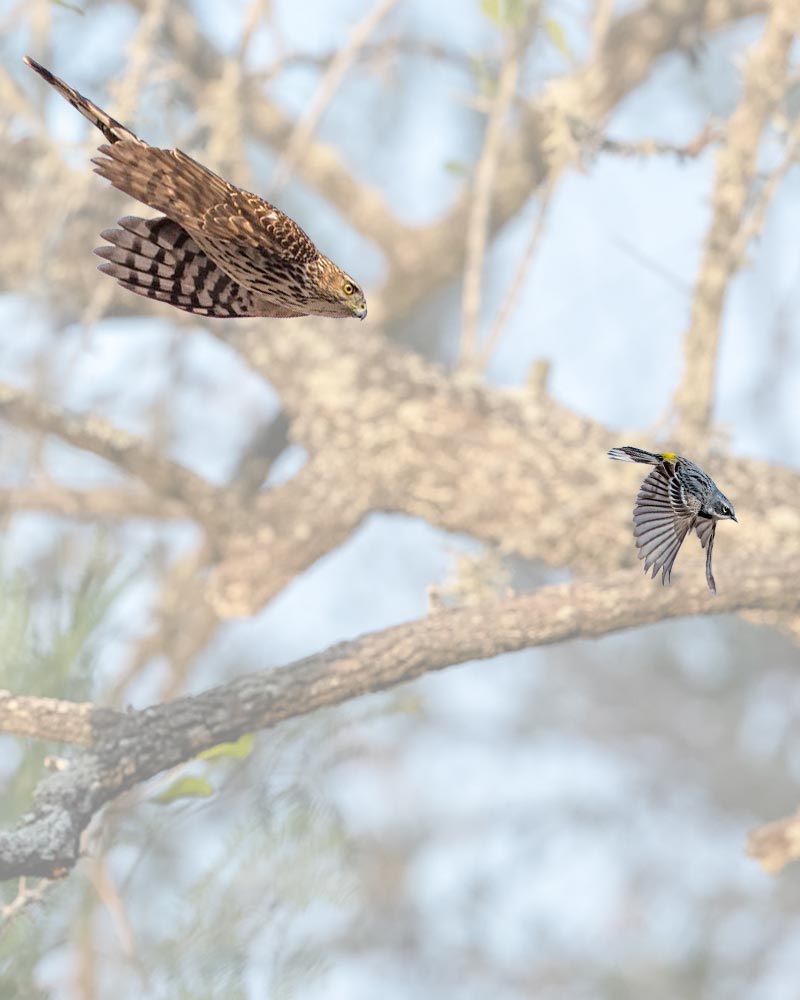
Active, agile chasing of target prey on the wing or ground, utilizing rapid flapping, endurance, and maneuverability.
Typical Practitioners: Golden Eagle, Sharp-shinned Hawk, Cooper’s Hawk, Northern Goshawk, Harris’s Hawk, Merlin, American Kestrel, Prairie Falcon, Peregrine Falcon, Aplomado Falcon, Gyrfalcon.
Stooping
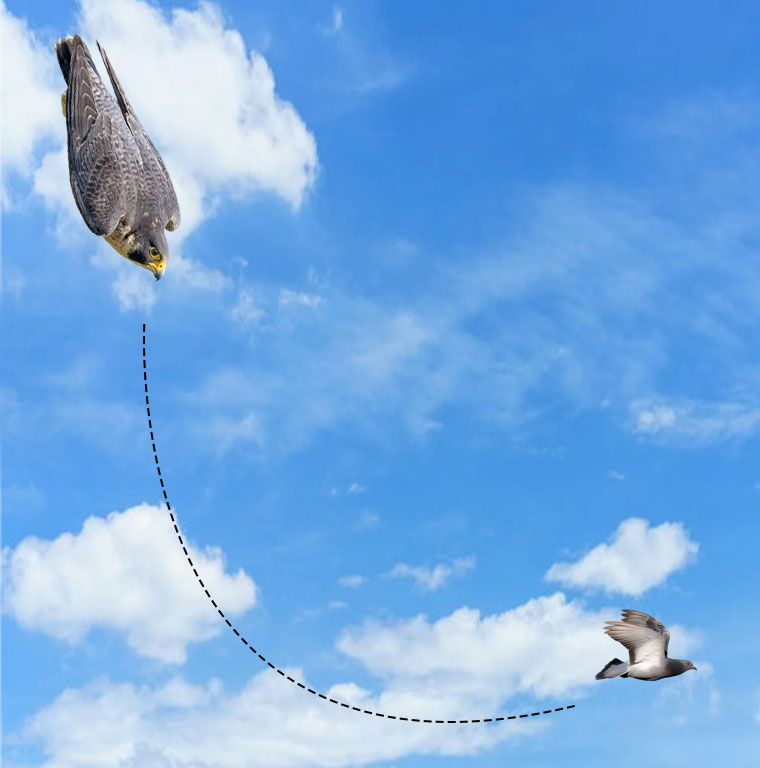
Folding the wings to enter a high-altitude, near-vertical, gravity-driven dive to strike or disable prey at blistering speeds.
Typical Practitioners: Golden Eagle, Short-tailed Hawk, Swainson’s Hawk, Merlin, Prairie Falcon, Peregrine Falcon, Aplomado Falcon, Gyrfalcon.
Flycatching
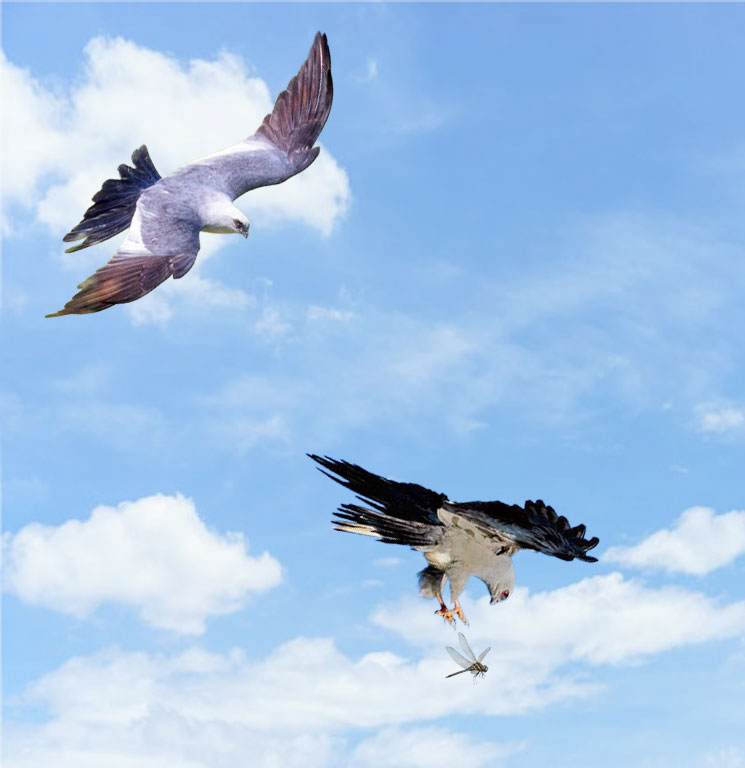
Snatching passing insects or small flying vertebrates cleanly out of the air on the wing, often consuming them mid-flight.
Typical Practitioners: Mississippi Kite, Swallow-tailed Kite, American Kestrel, Aplomado Falcon.
Scavenging / Piracy
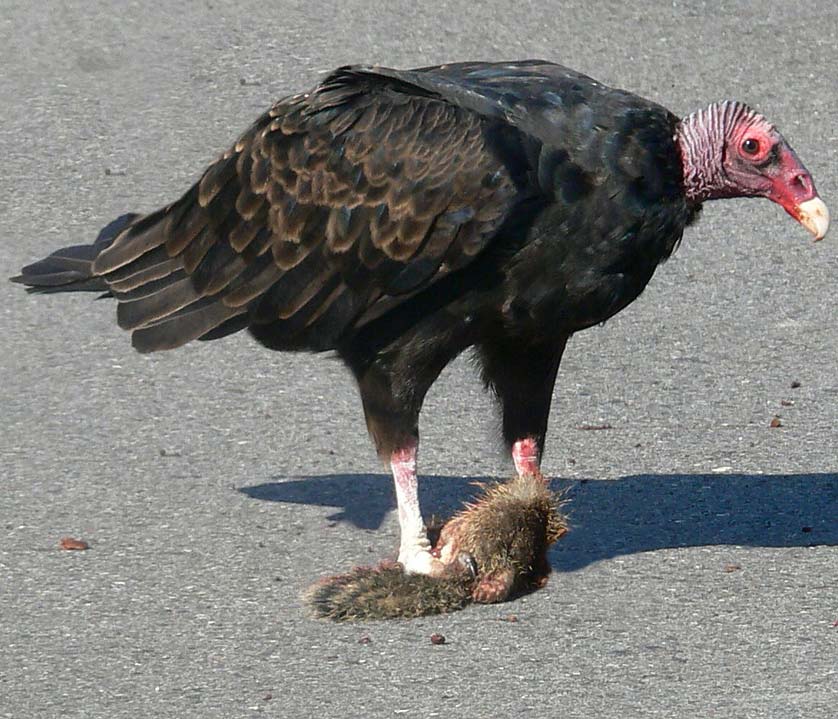
Locating and feeding on carrion (dead animal matter) using an acute sense of smell or vision, or actively harassing other predators to steal their catch.
Typical Practitioners: Turkey Vulture, Black Vulture, California Condor, Bald Eagle, Golden Eagle, Audubon’s Crested Caracara, Harris’s Hawk.
Case Studies: Extreme Behavioral Specializations
While the baseline hunting techniques outline general survival strategies, several North American raptors have evolved hyper-specialized behaviors that push the boundaries of avian intelligence and mimicry.
Harris’s Hawk Pack Hunting
In the arid deserts of the American Southwest, solitary hunting can be difficult. The Harris’s Hawk (Parabuteo unicinctus) solved this problem by evolving a sophisticated system of cooperative pack hunting. Functioning much like a wolf pack, a family group of up to six individuals will coordinate their attacks to take down large, agile prey such as desert cottontails or jackrabbits.
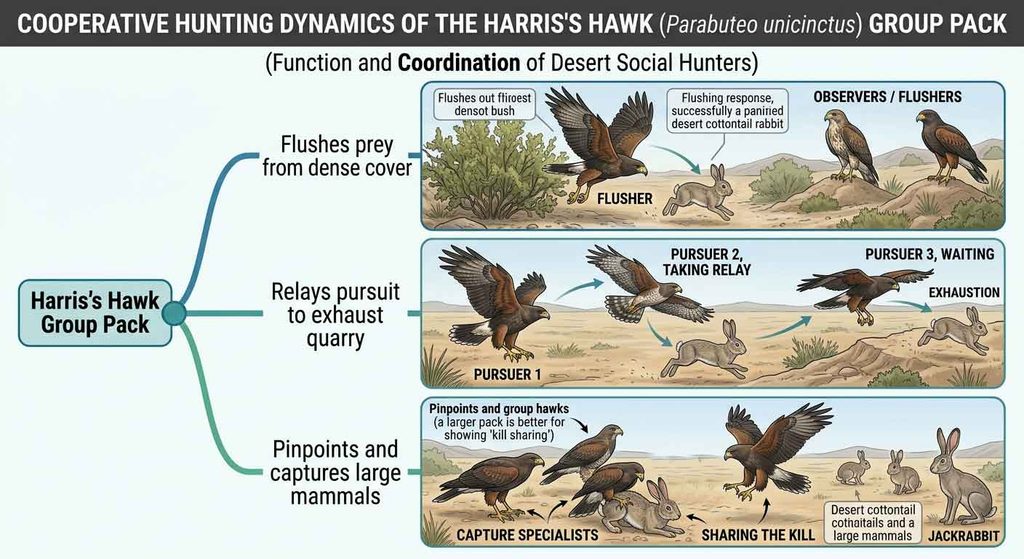
Their strategy seamlessly merges Perching and Pursuing:
- The Scout System: One or two hawks take up high-vantage perches on saguaro cacti to locate prey.
- Flush and Chase: Once a target is spotted, a flush-hawk dives low to drive the rabbit out of dense brush, while others give chase in alternating relay flights.
- The Siege: If the prey finds cover, the hawks surround the thicket on foot, flushing it again until it is exhausted and captured.
This social division of labor dramatically elevates their hunting success rate in barren landscapes.
The Zone-tailed Hawk’s Aggressive Camouflage
The Zone-tailed Hawk (Buteo albonotatus) employs a brilliant form of visual deception known as aggressive mimicry. To an untrained eye—and more importantly, to a small mammal—this hawk is virtually indistinguishable from a harmless, carrion-eating Turkey Vulture in flight. It shares the same dark plumage, a similar two-toned underwing pattern, and notably, it holds its wings in a distinct V-shaped “dihedral,” rocking unsteadily from side to side just like a vulture.
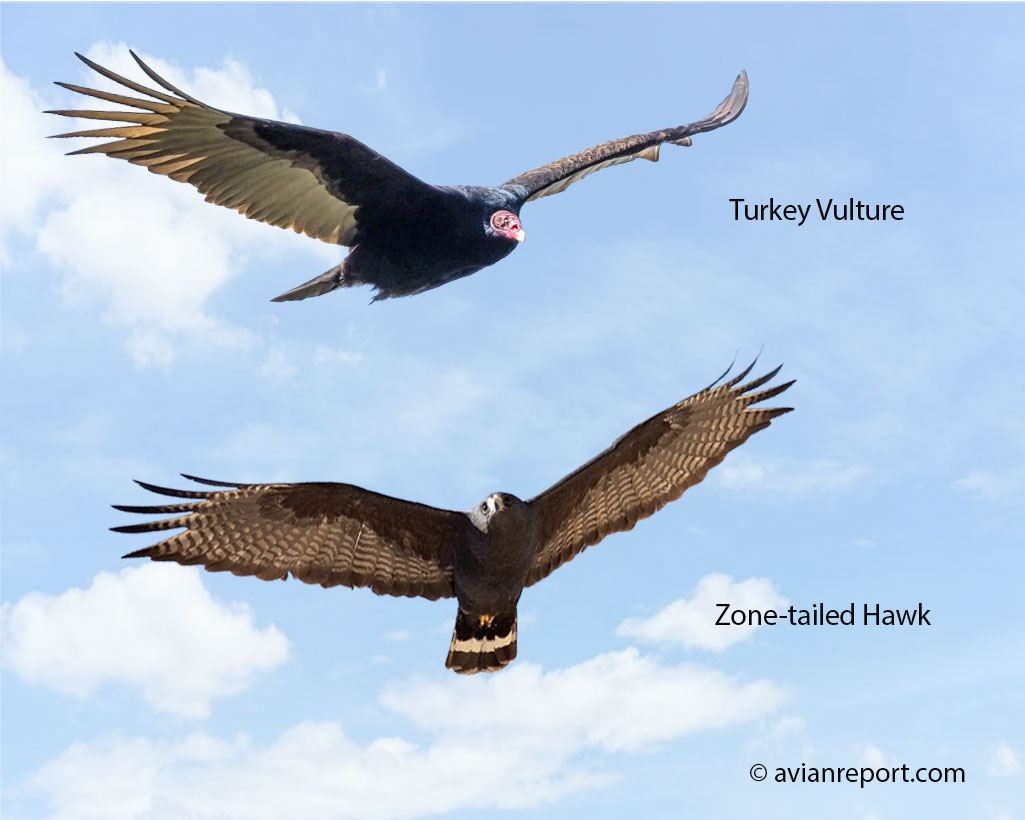
Because small mammals and birds have learned that Turkey Vultures pose zero predatory threat, they do not flee when a V-shaped silhouette passes overhead. The Zone-tailed Hawk exploits this complacency through a lethal variation of Coursing. It joins actual kettle lines of Turkey Vultures, mimicking their lazy, unhurried flight patterns. Once it drifts directly over an unsuspecting ground target, it breaks the illusion—instantly dropping out of the sky in a sudden, aggressive strike.
Accipiter Hunting and Resource Partitioning
North America’s three true forest hawks—the Sharp-shinned Hawk (Accipiter striatus), Cooper’s Hawk (Accipiter cooperii), and Northern Goshawk (Accipiter gentilis)—share highly overlapping woodland habitats. To survive without competing, they utilize near-identical hunting mechanics but beautifully partition their prey resources through a strict size gradient.
All three rely heavily on a combination of stealthy Perching and explosive Pursuing. They sit quietly inside the dense canopy, hidden from view. When a target is selected, they execute a blinding, agile dash through branches, twisting their bodies and steering effortlessly with long tails to ambush their target. However, their targets are vastly different:
- Sharp-shinned Hawk (Smallest): Weighing roughly as much as a robin targets small songbirds like warblers, finches, and sparrows, striking them mid-air with unparalleled nimbleness.
- Cooper’s Hawk (Medium): Crow-sized and structurally robust, the Cooper’s Hawk targets medium-sized birds such as American Robins, European Starlings, and Rock Pigeons, as well as small mammals like chipmunks.
- Northern Goshawk (Largest): The heavyweight powerhouse of the trio pursues much larger, energy-dense targets including ruffed grouse, crows, snowshoe hares, and tree squirrels.
These three Accipiter hawks separate their target diets along these structural boundaries allowing them successfully hunt the same forests without competing for the same meals.
Extreme Dietary Specializations: Kites and Specialized Hunters
Several species have abandoned generalist hunting altogether, refining their physical tools to target highly specific prey items.
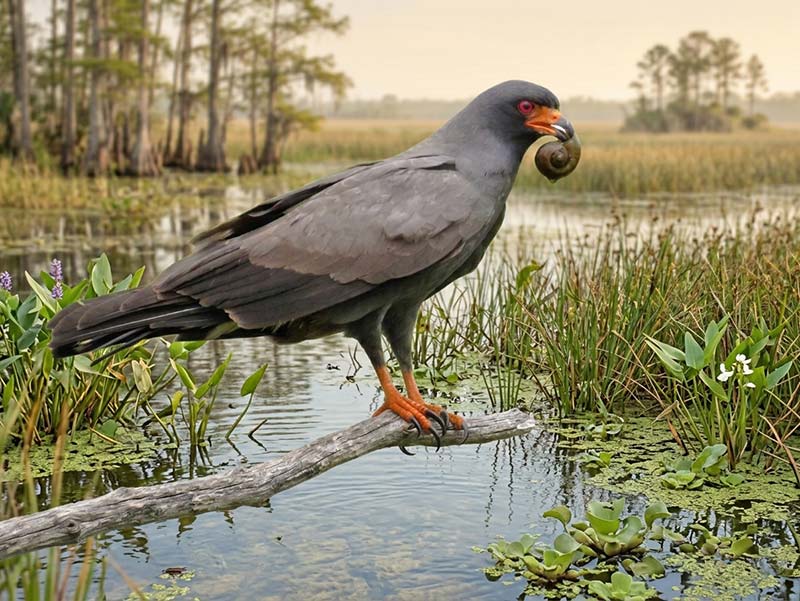
Snail Kite: The Surgical Extractors
The Snail Kite (Rostrhamus sociabilis) relies almost exclusively on freshwater apple snails. To hunt them, it low-courses over open marshland, dipping its talons just below the water’s surface to snatch a snail. Once perched, the kite showcases its primary evolutionary marvel: a highly elongated, deeply curved upper mandible. It inserts this razor-thin hook into the snail shell, cleanly slicing the columellar muscle to extract the meat without breaking a single piece of shell.
Hook-billed Kite: The Tree-Snail Specialists
Occupying a similar evolutionary lane, the Hook-billed Kite (Chondrohierax uncinatus) targets tree snails found in dense subtropical woodlands. Sporting a remarkably heavy, massive, hooked bill, it uses a forceful crushing technique to crack open land snail shells right on the branches, operating with a slow, deliberate perching approach that contrasts sharply with the swift aerial maneuvers of its relatives.
Swallow-tailed and Mississippi Kites: The Aerial Sweepers
The Swallow-tailed Kite (Elanoides forficatus) and Mississippi Kite (Ictinia mississippiensis) are built for continuous, fluid elegance. They utilize perpetual Flycatching and Kiting to feed on the wing. Spatially agile, these birds sweep through the air to catch cicadas, dragonflies, and even frogs, baby birds, and small lizards directly from the outer foliage of trees without stopping. They regularly transfer the food from their talons to their beak and consume it mid-flight, rarely needing to land during active feeding cycles.
Concluding Thoughts
The immense diversity of hunting techniques observed among North American birds of prey underscores the relentless power of evolutionary adaptation. From the calculated patience of a perch-hunting Buteo to the dizzying, gravitational speeds of a stooping Peregrine Falcon, these apex predators have mastered every physical law of the sky. Field observers can transition from simply seeing a bird to understanding the intricate biological mechanics of the hunt.
For an exhaustive breakdown of all definitions, concepts, and techniques used in this guide, please follow the link below to the main pillar page: Guide to Raptors (Birds of Prey) of North America.
References and Sources:
- Allaboutbirds.org
- eBird. (https://ebird.org/)
- Birds of the World: https://birdsoftheworld.org/bow/home
- Gill, Frank B., 1994. Ornithology – 2nd Edition, W. H. Freeman and Company.
- Sibley, David, 2000, The Sibley Guide to Birds. Alfred A. Knopf, Publisher.
- Species Longevity Data: United States Geological Survey (https://www.usgs.gov/)
- The Sibley Guide to Bird Life and Behavior, 2001. Chris Elphick, John Dunning, and David Sibley (eds). Alfred A. Knopf, New York.
Author:
